Years later, whenever I encounter paper daisies, I find myself remembering those afternoons spent crouched amongst the flower beds, searching for invisible worlds hidden beneath the blossoms. What once felt like simple make-believe now feels like something gentler, an invitation to slow down, look closely, and remain curious about ordinary things.
I sometimes wonder if wonder begins in moments like these. Not because the world itself changes, but because our attention does.
Whenever I bring my face close to a flower, I am reminded of those childhood beliefs and of the quiet joy of discovering small things.
When was the last time you brought your face close to a flower? When was the last time you looked beneath the blooms?
Whenever I do, I am reminded of the perspective through which I first discovered these little worlds, and of the wonder that once filled an ordinary garden.
Paper Lantern
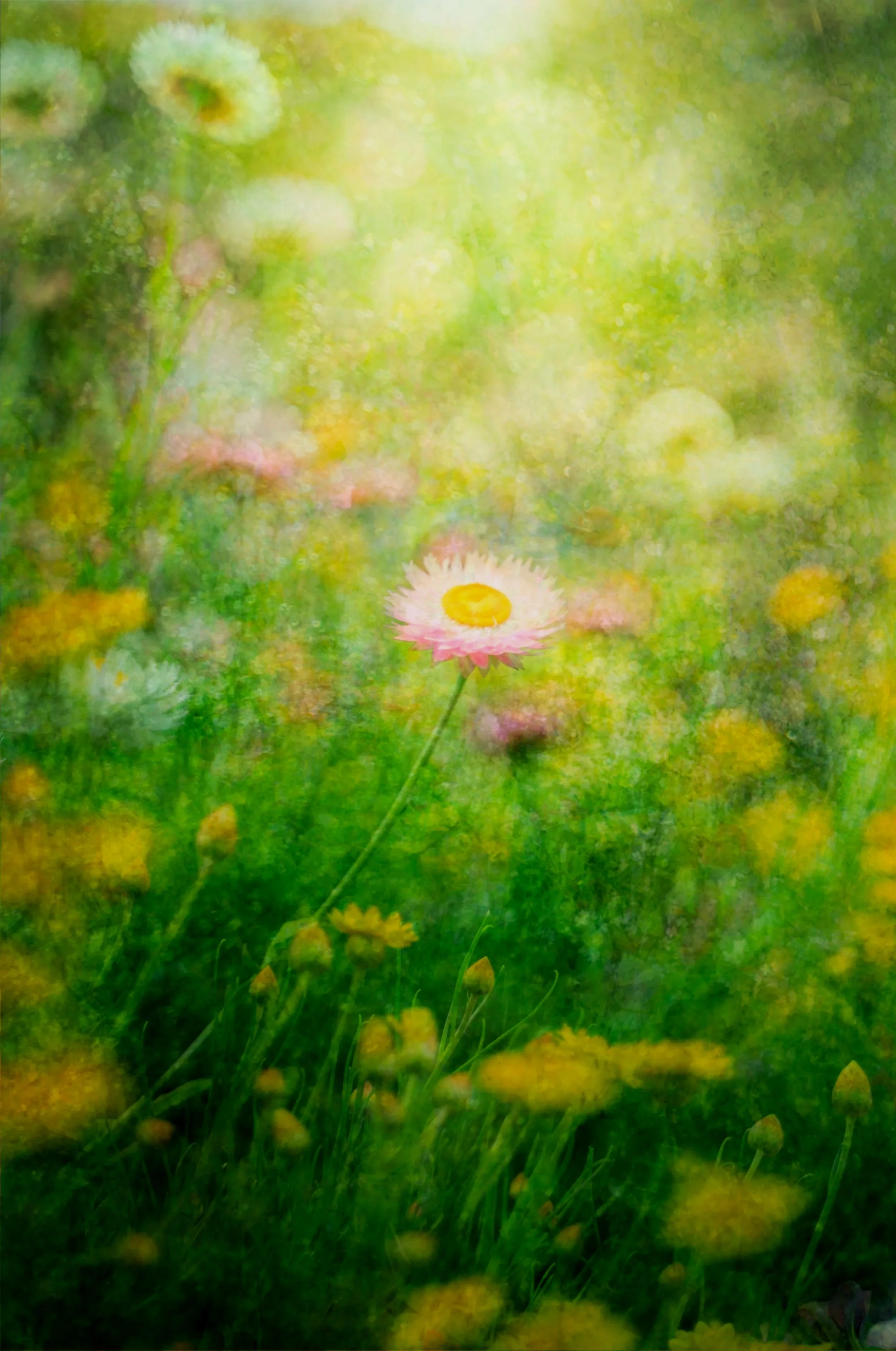
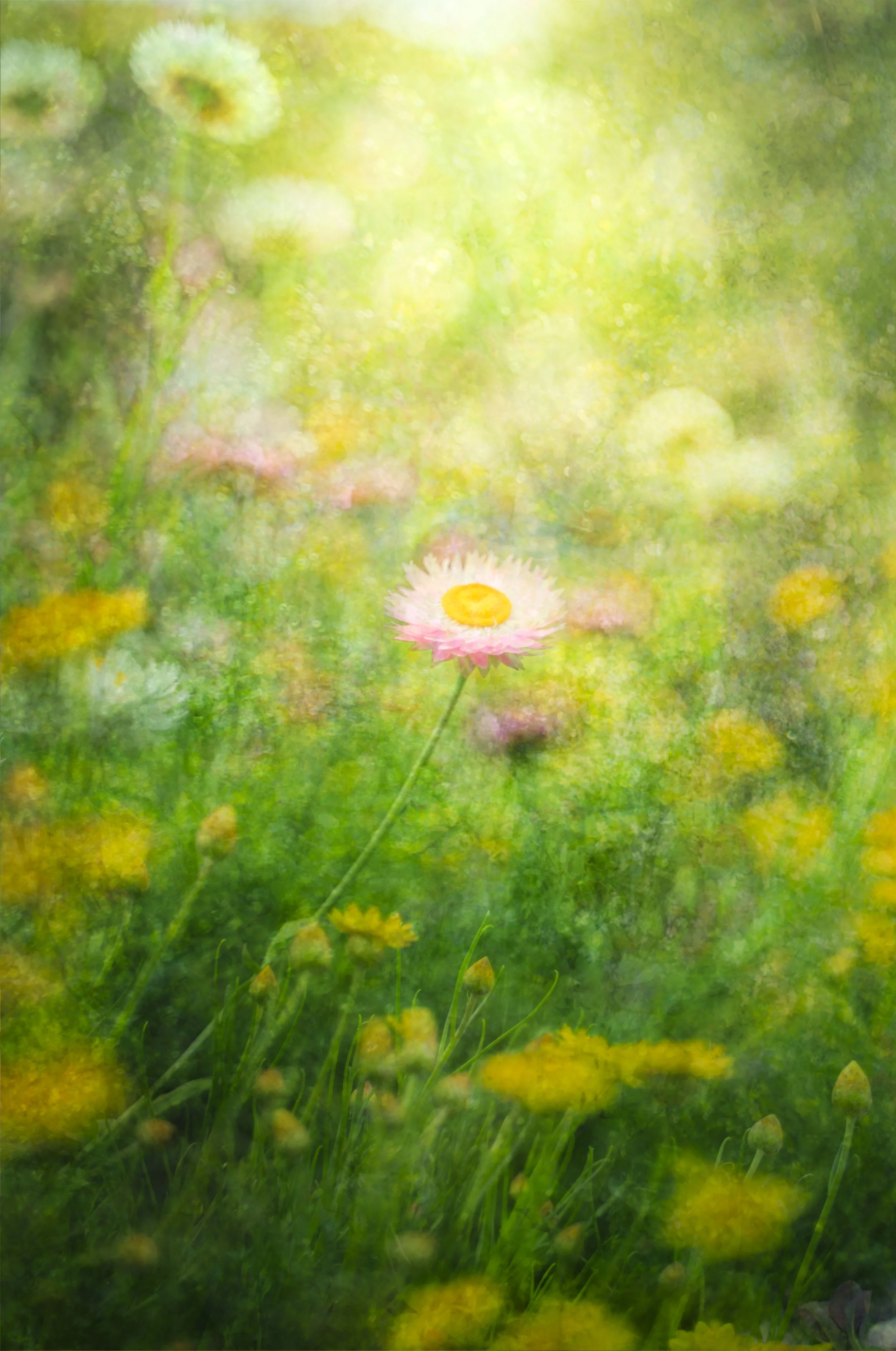
As a child, I imagined that the delicate paper daisies were carefully handcrafted from folded silk paper by tiny hands hidden deep within the garden. I pictured unseen makers patiently shaping each petal with great care, creating little lantern-like blooms and leaving them amongst the leaves to catch the sunlight and glow softly in the afternoon.
Whenever I crouched down to peer closely into the flower beds, I remember noticing one pink paper daisy stretching gently towards the sunlight. Bathed in the golden glow of late afternoon, it seemed to shine like a little lantern, as though proudly showing off the craftsmanship of its hidden makers to the world.
From that low perspective, the garden transformed. Ordinary blooms became towering forests, fallen petals became winding pathways, and the smallest details opened into entire worlds waiting to be explored. I was convinced that little creatures must be wandering unseen among the stems, discovering wonders of their own.
Looking back, I realise I was not only imagining fantasy worlds. Without knowing it, I was learning how to see differently.